| |
| Tuesday, 13 October 2026 |
| The Wallace Collection; A Place of Genius |
| Rupert Dickens |
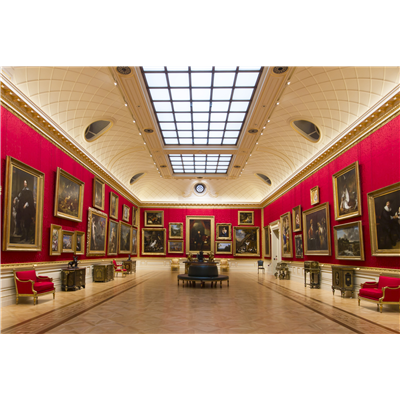 |
Have you all been already? It has had an update, a makeover but everything is still there!Hertford House opened as a museum in 1900. The Dutch Paintings, the French furniture, , the gilt bronzes and the Sevres Porcelain were acquired by the 3rd Marquess but it was the 4th Marques , an avid collector who acquired the non European arms and architecture. You are in for a ride through an amazing and astonishing collection. RUPERT DICKENS is an Art Historian who specialises in Dutch and Flemish Art and is a guide at The Wallace Collection |
|
| Tuesday, 10 November 2026 |
| The Continuous Thread - Weaving Cultures in the Americas |
| Chloe Sayer |
 |
This lecture is a wonderful opportunity to study the fusion of cultures, the adoption of traditions from Spain, silk , beads etc with the native cotton of the indigenous population of South America. CHLOE SAYER is a freelance author, lecturer and curator who specialises in the native crafts and textiles of MEXICO and GUATAMALA. |
|
| Tuesday, 08 December 2026 |
| Rembrandt’s Self Portraits |
| Lois Oliver |
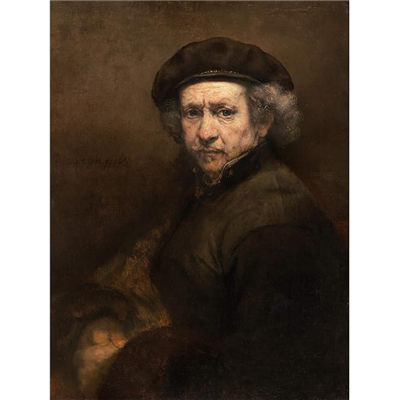 |
REMBRANDT was born in 1606 in Leiden ,a major centre of global trade.The country was prosperous and this period has been named The Dutch Golden Age. Many of REMBRANDTS self portraits were painted when he was relatively young and may have been done to advertise his skill.When he adopted the chiaroscuro style his paintings became more dramatic and most have endured the test of time. LOIS OLIVER is an Art Historian and is currently Professor in History of Art at the University of Notre Dame and a Visiting Lecturer at the Courthauld Institute. |
|
| Tuesday, 12 January 2027 |
| From Coalbrookdale to the Crystal Palace: Art, Design and the Industrial Revolution |
| Jo Walton |
 |
In 1709, in a small riverside town in Shropshire, a Quaker industrialist called Abraham Darby set up the Coalbrookdale Iron Foundry. His revolutionary new method of smelting iron ore would make him a pioneer of the Industrial Revolution. From the beautiful Iron Bridge across the river Severn, built by his grandson in 1776, to the majesty of the Crystal Palace, opened by Queen Victoria in 1851, new forms of technology created a world of factories, railways and mass production. In this talk we’ll meet inventors, industrialists and designers like Josiah Wedgwood, Matthew Boulton, Thomas Telford and the Stephensons, whose products married design and modernity and became renowned across Europe. |
|
| Tuesday, 09 February 2027 |
| Threads of History: The World of the Bayeux Tapestry |
| Rupert Willoughby |
 |
In this lively introduction to the tapestry – so much more than the story of Hastings – Rupert unravels some of its mysteries, places it in the context of its age and firmly establishes it as a landmark in the history of Western art. |
|
| Tuesday, 09 March 2027 |
| Civic Infrastructure of Ancient Rome - How the City Worked |
| Stuart Harvey |
 |
Join Rome tourist guide Stuart Harvey for a fascinating look at the incredible civic infrastructure of ancient Rome, a city of over a million inhabitants in the 1st century AD. This lecture will explore the engineering and architectural skills behind the roads, bridges, aqueducts and thermals baths. We will examine the great walls of Rome, over 11miles long and for the most part still standing today. A million people needed feeding - the trade network around the Mediterranean centred on the Eternal City, bringing unimaginable quantities of Grain, Wine, olive oil and other vital commodities into the city. |
|
| Tuesday, 13 April 2027 |
| Making an Old Master: Apprenticeship and studio life for the would-be artist |
| Chantal Brotherton-Ratcliffe |
 |
What did ignorant 10 year-old boys like the young Botticelli or the young Rubens learn during their apprenticeships to become the artists we know today? This lecture looks at the hard work that went into making a painting, and the training needed to become a painter. I will use the evidence in paintings themselves to understand daily life in the studio, - the darkness and the cold of winter, the precarious scaffoldings needed to paint any oversize picture, or the studies and preparatory sketches needed to train a good artist. And what was it like for any young woman wanting to become an artist? |
|
| Tuesday, 11 May 2027 |
| Truth or Deceit?: Why Contemporary Artists Make Photographs |
| Joshua White |
 |
This lecture explains how artists are changing photography from factual documentation towards a more enquiring and challenging medium. From the origins of art photography to the conceptual and staged work of artists working today, the talk illustrates how our understanding of photography has been deliberately disrupted. From the 1830s, the almost miraculous discovery of fixing an image enabled photographers to record events, people and places with astonishing accuracy. By contrast, a painting, drawing or print was understood to be composed and designed, incorporating multiple decisions made by the artist to elevate the subject or dramatically capture the viewer's interest. |
|
| Tuesday, 13 July 2027 |
| Henri Matisse: cut up, cut down and cut outs! |
| Alan Silman |
 |
Henri Matisse ranks with Picasso as one of the real blockbuster artists of the 20th century. This lecture will focus on his health especially the continued series of psychological and physical challenges. From early childhood he 'suffered' ill health, with what today could be referred to as neuroses. Multiple lifestyle and psychiatric interventions did little to give him peace but did not prevent him producing his magnificent series of post-impressionist works. In addition, a well-documented series of surgical mishaps, against the background of the Second World War, left him, if not bed bound, but chair bound. |
|
| Tuesday, 14 September 2027 |
| Barbara Hepworth: From Yorkshire to the United Nations – The Life and Work of Britain’s Most Renowned Female Sculptor |
| Ian Giles |
 |
This lecture celebrates the remarkable life and career of British sculptor Barbara Hepworth, tracing her journey from rural Yorkshire to international acclaim. It begins with her early friendship with fellow sculptor Henry Moore and follows her travels across Europe in the 1930s, when she met Picasso and learned to carve marble in Florence. The lecture explores Hepworth’s artistic influences and her commitment to abstraction, showing how landscape, family life and place profoundly shaped her sculpture. It examines key works in stone, plaster and bronze, situating them within the contexts of modernism and post-war Britain. |
|
| Tuesday, 12 October 2027 |
| In the footsteps of Wren: the architecture of Norman Foster and Richard Rogers |
|
 |
|
|
| Tuesday, 09 November 2027 |
| Indians, Buffalo and Storms: The American West in 19th Century Art |
| Toby Faber |
 |
Uses art of the nineteenth century to tell the story of the westward expansion of the United States from the first explorations and contacts with native Americans to the near-extermination of the buffalo. |
|
| Tuesday, 14 December 2027 |
| The Baroque Country House |
| Amy Lim |
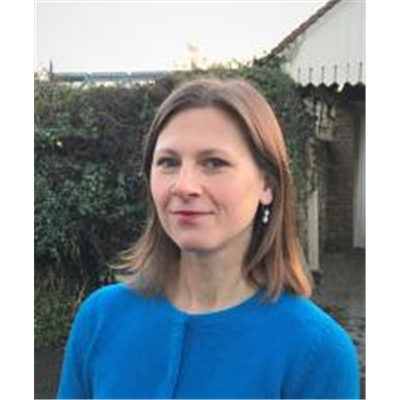 |
Many of Britain’s best-loved country houses were created in the ‘Baroque’ period (c. 1660-1720). Visiting some of the most iconic houses of the period, including Chatsworth, Petworth, and Blenheim, we will meet the patrons who created them, and look at some of the highlights of their sumptuous interiors, gardens and collections, addressing the question: what is ‘Baroque’? |
|